


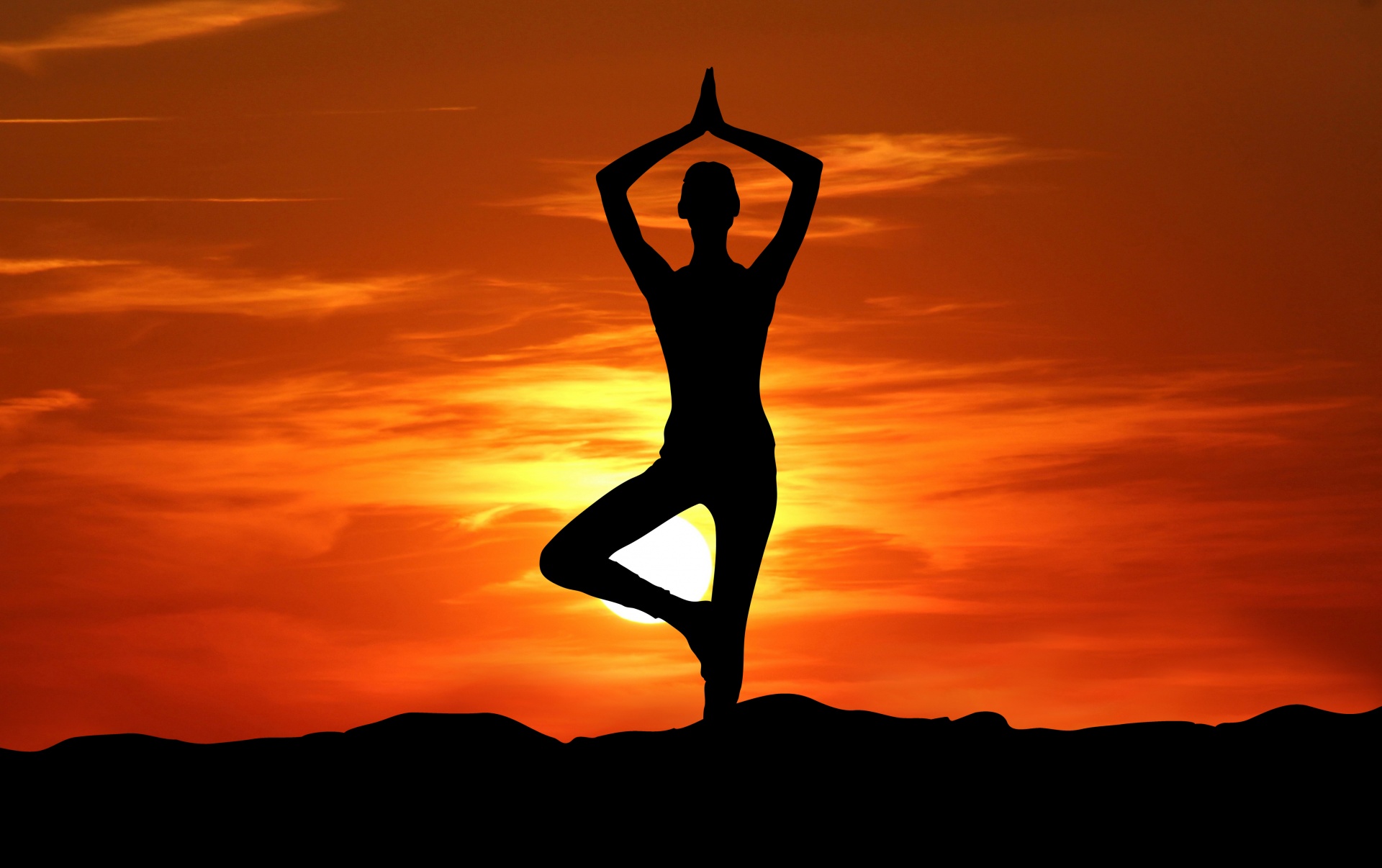


Yoga is a spiritual discipline, which focuses on establishing the balance between the mind and the body. Many people enjoy it across the world and it’s one of the most popular ways of exercising and relaxing.
However, while most of us love doing yoga, not so many people know a lot about it.
Here is how yoga developed over the years:
Origin of Yoga
The word ‘yoga’ originates from ancient Sanskrit word ‘yuj’, which means ‘to join’ or ‘to unite’ – which is exactly what yoga does, it unifies the mind and the body, creating the perfect balance. Freedom of living in all parts of your life, harmony and healthy life are what yoga aims to achieve. This is the path to ‘moksha’, the state of liberation or `kaivalya’ which is the state of freedom.
Yoga dates back to 2700 B.C. and Indus Saraswati Valley civilization. “It was first mentioned in sacred texts, Rig Veda, which contained ancient mantras and songs that were to be used by Brahmans (Vedic priests). From then on, yoga was developed by priests like Brahmans and Rishis – they documented what they did and what they believed in Upanishads, 200 scriptures telling of their practices”, – says Joan Glover, a History writer at Bigassignments.com and Via Writing.
History of Yoga


Even though there are historical evidences telling of existence of yoga in 2700 B.C., most of our knowledge of yoga comes from the Pantajali’s period – scriptures like Vedas, Upanishads, Smritis and beliefs in Buddhism, Jainism, Panini or Puranas.
- The Classical Period – 500 B.C – 800 A.D.
This is considered to be the most fertile period in the history of yoga – Yoga Sutras and Bhagawadgita developed in this time period. Five Great Vows (Pancha Mahavrata by Mahavir and Ashta Magga) together with Eight Fold Path Of Buddha are considered to be early Yoga Sadhana. Gyan Yoga, Bhkati Yoga and Karma Yoga have all been explicitly represented in Bhagawadgita. Before this time, Yoga was a collection of various ideas and Pantajali organized the practice of yoga.
The aspect of mind became important and it was brought out in Yoga Sadhana.
- Post-classical period – 800 A.D. – 1700 A.D.
This is the period of teachings of Acharyatrayas-Adi Shankracharya, Madhavacharya, Ramanujacharya as well as contributors like Suradasa, Mirabai, Tulasidasa and Purandardasa. Yoga masters designed practices to prolong life and make it better. “They accepted that body is the way to achieve enlightenment. Tantra yoga was created and developed to cleanse body and enhance the mind.
John Miles, During this period Hatha Yoga was popularized by Natha Yogis like Gorkshanatha, Swatmaram Suri, Matsyendaranatha, Cauranginatha etc. Hatha Yoga is what is practiced and seen as yoga in the West”, – says James Sullins, a Yoga blogger at OX Essaysand Revieweal.
- Modern Period – 1700 A.D. – 1900 A.D.


This is the time of development of the Raja Yoga but also Vedanta, Bhakti, Natha and Hatha Yoga. During this time, yoga masters started traveling to the west in the late 1800s and early 1900s. In 1920s and 1930s Hatha Yoga was promoted in India and the first Hatha Yoga school was established in Mysore in 1923. Later, in 1936, Swami Sivananda also founded the Divine Life Society on the Ganges River.
“The real popularization of yoga in the west came when Indra Devi when she opened her yoga studio in 1947 in Hollywood. From then on, yoga gained millions of followers”, – explains Jackie Davis, a Research writer at Elite Assignment Help.
Types of Yoga
The Upanishads state that there are four types of yoga – mantra yoga, laya yoga, raja yoga and hatha yoga – while in Bhagavadgita you can see that there are karma yoga, jnana yoga, karma sanyasa yoga, buddhi yoga and bhakti yoga.
- Mantra yoga means repetition of a mantra or a syllable until the enlightenment comes. Japa yoga is a variation of this.
- Sabda yoga means that yogi is attempting to listen an internal current of sound by withdrawing into himself.
- Laya yoga means that yogi dissolutions his lower self and his mental activity while the kundalini energy is supposed to rise from the base of the spine to the head.
- Natha yoga means the practice of difficult body positions, breathing practices and use of certain chemicals.
- Siddha yoga is similar to Natha yoga and it was made popular recently by Swami Muktananda.
- Raja yoga is one of the most standard forms of yoga which involves practices of eight fold yoga.
- Kara yogameans performing actions without any desire as a way to please the gods.
- Jnana, buddhi and bhakti yoga involve usage of knowledge and intelligence as a way to achieve the highest purpose – it doesn’t involve techniques but it’s rather a way of life.
There are many more types of yoga, popularized and practiced in modern times – each one with it’s own way to reach balance and enlightenment.
Benefits of Yoga
There are many benefits of yoga, most of them related to enlightenment of the mind. However, here are some immediate benefits of yoga:
- Better health
- Youthfulness
- Self-control
- Body vigor
- Relaxation and inner peace
- Mindfulness
There have been mentions and claims that a mass practice of yoga would end wars, lead to world peace, reduce crime rates and improve overall state of the mankind. Tradition of yoga realizes some benefits of yoga which are related to attaining some supernatural powers:
- Power to become tiny
- Power to become light
- Power to become heavy
- Power to move freely
- Will power
- Control over elements
- Mastery of body and mind
- Power to fulfil all desires
Yoga in the modern world
In modern world, yoga is practiced by many for various reasons. Most people practice it for physical relaxation and inner peace.
“There is no harm in practicing yoga but it’s a serious discipline and it should be approached as such. With the help of a certified teacher and a little exploration of the body and the mind, anyone can do yoga”, – comments Lisa Lyles, a Sport writer and editor at Academizedand Best British Essays.
Conclusion
Origin, history and development of yoga is one of the most interesting stories in the world. This discipline, so strongly rooted in Asia, became one of the most popular disciplines in the world – it’s history could fill thousands of pages, but this short overview is hopefully there to inform more people.
Author’s bio:
Freddie Tubbs is a research writer and editor at Boom essays. He regularly takes part in online marketing conferences and writes article for such online magazines and blogs, as the Atlantic, Write my Australia and Australian help.